Conference
The PASC Conference series is an international and interdisciplinary platform for the exchange of knowledge in scientific computing and computational science with a strong focus on methods, tools, algorithms, workflows, application challenges, and novel techniques in the context of scientific usage of high performance computing.
The conference was initiated in 2014 by the Platform for Advanced Scientific Computing (PASC) structuring project, which positions Swiss computational sciences in the emerging exascale era. PASC aims at promoting a joint effort to address key scientific issues in various domain sciences through interdisciplinary collaborations between computational scientists, software developers, computing centres and hardware developers within Switzerland.
The Conference is co-sponsored by the Swiss National Supercomputing Centre (CSCS – a unit of ETH Zurich) and the Association for Computing Machinery (ACM). The conference is managed by CSCS.
PASC27 will be held from June 28 to 30, 2027 at the Palazzo del Congressi, Lugano, Switzerland.
PASC27
June 28 – 30, 2027
Palazzo dei Congressi
Piazza Indipendenza 4
6900 Lugano
Switzerland
https://pasc-conference.org/editions/pasc27/
PASC27 Theme
Accelerating Scientific Computing through AI-HPC Convergence: Open Challenges
Scientific computing has entered a new era in which AI systems, large-scale simulations, experimental data, and HPC infrastructures cooperate as integrated discovery engines. Although the convergence of AI and HPC is creating unprecedented opportunities across scientific domains, this requires addressing significant scientific and technical challenges. PASC27 will explore how the convergence of AI and HPC can accelerate scientific discovery while preserving scientific rigor, reproducibility, transparency, trustworthiness, scalability, and co-design principles for future scientific workflows.
Conference Chairs

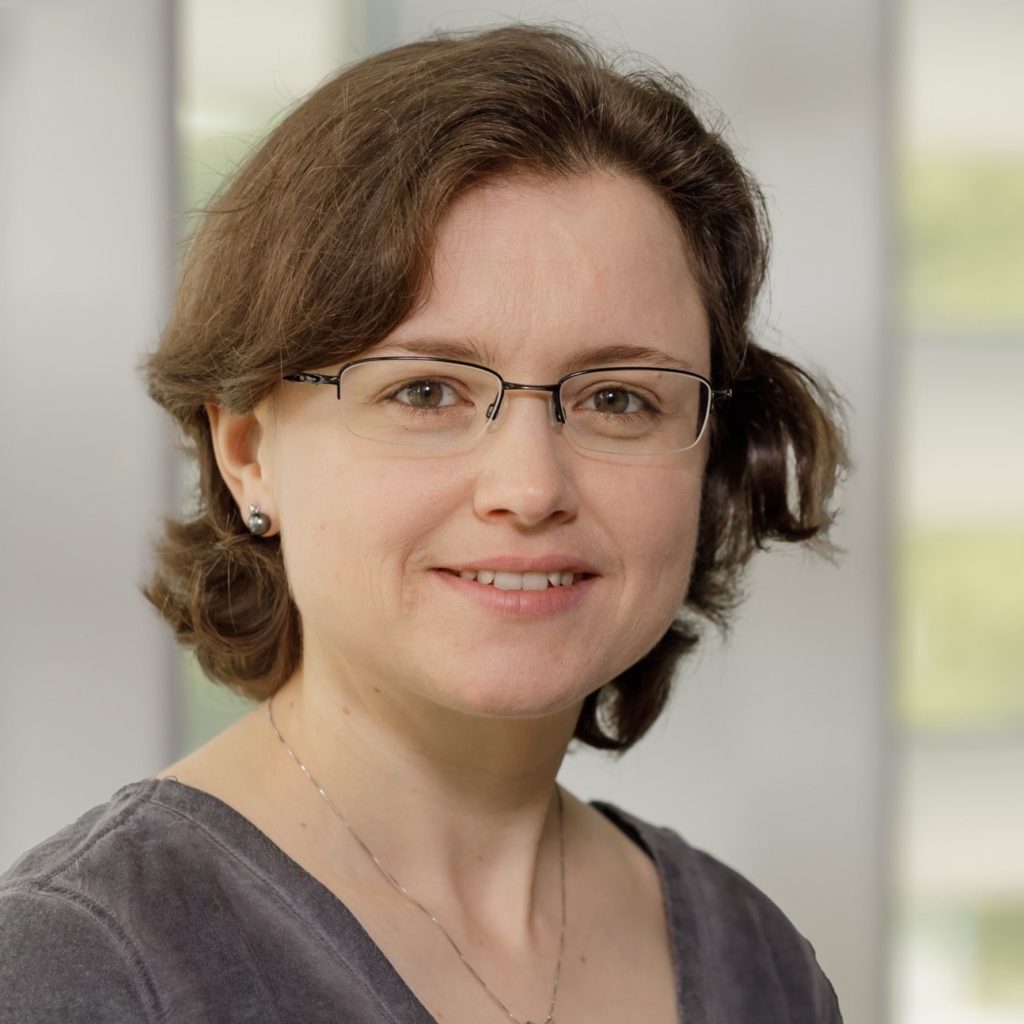
Cristina Silvano
Politecnico di Milano, Italy
Cristina Silvano is Full Professor of Computer Architecture at Politecnico di Milano and Chair of the Computer Science and Engineering research area. In 2022, she promoted the M.Sc. program in HPC Engineering at Politecnico di Milano. She was named IEEE Fellow in 2017 for her contributions to energy-efficient computer architectures. She has served as Scientific Coordinator of three European research projects: ANTAREX, 2PARMA, and MULTICUBE. Her research interests include computer architecture and electronic design automation, with a focus on design space exploration for energy-efficient deep neural network accelerators and autotuning techniques for HPC applications.

Erik Draeger
Lawrence Livermore National Laboratory, US
Dr. Erik Draeger is the Director of the High Performance Computing Innovation Center at Lawrence Livermore National Laboratory as well as the Scientific Computing group leader at the Center for Applied Scientific Computing. He currently serves as the LLNL representative on the Alliance Strategy Team for NNSA’s Predictive Science Academic Alliance Program. Erik has over two decades of experience developing scientific applications to achieve maximum scalability and time to solution on next-generation architectures. He has been a finalist for the Gordon Bell Prize six times since 2005 and won the prize in 2006.
Target Audience
The PASC Conference seeks to engage participants from academia, research labs and industry to address important issues in HPC and computational science. PASC27 is inviting researchers from diverse scientific backgrounds to promote interdisciplinary collaboration and exchange of expertise. The conference is an opportunity for researchers in branches of science that require computer modeling and high-performance simulations to discuss computational techniques and technologies.
Event format
We are pleased to host PASC27 as an in-person event at Palazzo dei Congressi, Lugano, Switzerland.
Conference contributors whose submissions are accepted for presentation at the conference, should thus plan to travel to Lugano and present their work on-site.
Program
The technical program of PASC27 is organized around the following scientific domains:
- Chemistry and Materials (incl. ceramics, metals, polymers)
- Climate, Weather, and Earth Sciences (incl. solid earth dynamics)
- Applied Social Sciences and Humanities (incl. behavioral, economic, legal, political, business, philosophy, languages, the arts, ethics in computing such as environmental impact of HPC, mitigation of biases in algorithms, machine learning, etc.)
- Engineering (incl. computational fluid dynamics, computational mechanics, computational engineering, materials, acoustics, signal processing, etc.)
- Life Sciences (incl. biophysics, computational biomechanics, genomics, bioinformatics, systems biology, neuroscience, and computational biology)
- Physics (incl. astrophysics, cosmology, plasma physics, and quantum information sciences)
- Computational Methods and Applied Mathematics
We also encourage submissions that explore AI across all the above areas.
The three-day program will include keynote presentations, minisymposia, peer-reviewed papers, panels and poster sessions. The conference is co-sponsored by ACM SIGHPC, and full papers will be published in the ACM Digital Library.