Resilient Science: Sustaining Computation in a Market Optimized for AIPanel Discussion
This panel discussion will focus on the PASC26 theme: Building Trust in Science through HPC Co-Design.
What happens when the world’s most powerful computers stop being built for science? Supercomputing, once the quiet workhorse of climate models, quantum chemistry, and astrophysics, now fuels a global race for dominance in artificial intelligence and data driven industries. The result: a market optimized for inference speed and low precision arithmetic, not for 64 bit calculations to understand the physical world. As compute demand explodes, so too does competition for scarce resources—chips, memory, and even trusted supply chains.
This shift poses an uncomfortable question for researchers: how much of our digital infrastructure do we truly own or control? Proprietary architectures and vendor locked ecosystems are eroding the openness that once defined scientific computing. Transparency and reproducibility—cornerstones of credible science—risk being replaced by dependency and opacity.
This panel invites thought leaders from academia, industry, and policy to explore whether science can remain sovereign in an increasingly commercial, constrained, and contested computational landscape. What pathways exist for developing sovereign, open, and interoperable computing environments that preserve transparency, reproducibility, and long term access? Can we rebuild trust through open standards, interoperable platforms, and transparent governance? Or will scientific computing become a tenant in someone else’s silicon empire?
Moderator
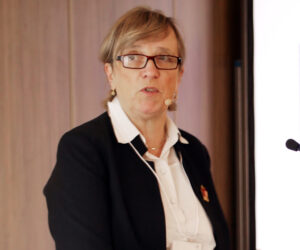
(ICES Foundation, Switzerland)
Marie-Christine Sawley (Swiss/French) has more than 30 years of experience in HPC and large scale computing innovation and management. She has built expertise as HPC technology manager, a role in which she has championed the advancement of leading science, mission-critical computing, and industry partnerships. In her long career she was the director of CSCS-ETHZ (2003 – 2008) during which the developed the WLCG national infrastructure hosted at CSCS; resource manager of CMS-CERN Computing (2008-2010); European Intel Exascale lab Director (2010-2020) a period during which she collaborated with leading research centres on testing Exascale range innovative technologies. She was elected to the Swiss Academy of Technical Sciences in 2024. HPC and Exascale Advisor for the ICES Foundation; president of the IDEAS4HPC and consultant HPC and exascale projects. Marie-Christine is a physicist by training and holds a PhD in Plasma Physics from EPFL.
Panelists
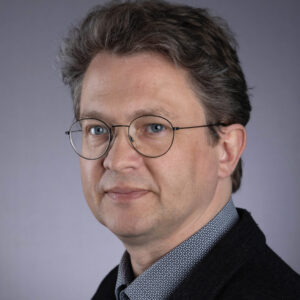
(HPE EMEA Research Lab, Switzerland)
Utz-Uwe Haus, Head of the HPE HPC/AI EMEA Research Lab (ERL), studied mathematics and computer science at the Technical University of Berlin (TU Berlin). After obtaining a doctorate in mathematics at the University of Magdeburg (Germany) he worked on nonstandard applications of mathematical optimization in chemical engineering, material science, and systems biology. He co-founded CERL, the CRAY EMEA Research Lab in 2015. He’s now leading the HPE ERL, part of Hewlett Packard Labs, a team dedicated to fostering long term technical relationships with customers and partners, and performing co-design of solutions outside the current product portfolio. His current interests focus on enabling middleware for sustainable and secure usage of HPC/AI systems and digital twins as well as novel compute architectures.
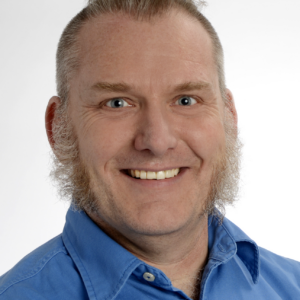
(Nvidia Inc., Switzerland)
Peter Messmer is Senior Director of Developer Technology for HPC at NVIDIA, where he works with partners and customers to advance scientific discovery and engineering innovation through accelerated computing and AI-enhanced workflows. He leads teams spanning HPC applications, digital twins, edge computing and developer enablement, at the crossroads of advanced computing and real-world research challenges. With several decades of hands-on experience in computational physics, GPU computing, and scientific applications, Peter brings deep expertise in applying advanced technologies to complex research and engineering problems. He holds both an MSc and a PhD in Physics from ETH Zurich, specializing in kinetic plasma physics and nonlinear optics.
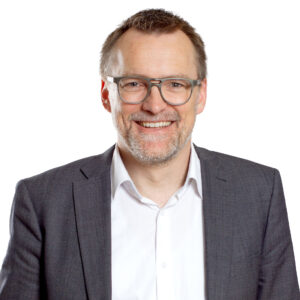
(Bern University of Applied Sciences, Switzerland)
Matthias Stürmer is Professor at the Bern University of Applied Sciences (BFH), where he heads the Institute for Public Sector Transformation, and founder of the Research Center for Digital Sustainability at the University of Bern. His work focuses on digital sustainability, open source software, artificial intelligence, natural language processing, open data, and digital transformation. He previously worked at EY (Ernst & Young) and Liip AG and holds a PhD from ETH Zurich on collaboration between open source communities and technology companies. He is president of CH Open and the Digital Impact Network, co-founder of Opendata.ch, and managing director of the Parliamentary Group for Digital Sustainability.