The PASC Conference series is an international and interdisciplinary platform for the exchange of knowledge in scientific computing and computational science with a strong focus on methods, tools, algorithms, workflows, application challenges, and novel techniques in the context of scientific usage of high performance computing.
The conference was initiated in 2014 by the Platform for Advanced Scientific Computing (PASC) structuring project, which positions Swiss computational sciences in the emerging exascale era. PASC aims at promoting a joint effort to address key scientific issues in various domain sciences through interdisciplinary collaborations between computational scientists, software developers, computing centres and hardware developers within Switzerland.
The Conference is co-sponsored by the Swiss National Supercomputing Centre (CSCS – a unit of ETH Zurich) and the Association for Computing Machinery (ACM). The conference is managed by CSCS.
PASC26 will be held from June 29 – July 1, 2026 at University of Bern & PHBern, Switzerland.
PASC26
June 29 – July 1, 2026
University of Bern & PHBern
Fabrikstrasse 6 and Fabrikstrasse 8
3012 Bern
Switzerland
PASC26 Theme
Building Trust in Science through HPC Co-Design
High Performance Computing (HPC) co-design is realized through collaboration among individuals and teams who shape interoperability among hardware and software technologies, artificial intelligence, distributed computing infrastructure, advanced simulation and real-time data analysis.
As scientific discoveries and challenges grow in scale and complexity, enabled by high-fidelity mathematical models, cross-cutting artificial intelligence (AI), and the rise in computational capacity,
- How can we ensure trust in the methods, processes, and solutions derived through exascale-class co-design?
- How can we enable validated, reproducible, and reliable scientific results with HPC?
- How will co-design position HPC for future demands on scientific system trustworthiness?
- How can we strengthen societal trust towards the research ecosystems?
- Can the scientific computing community help deepen public communication regarding research findings?
We invite the PASC26 audience to join us in exploring topics such as:
- AI in medicine and healthcare: How do we work with doctors and patients to enhance confidence and reliability in diagnoses?
- Extreme weather event modeling and simulation: Can we demonstrate validity of our models to improve trust in reliability and efficacy in our results?
- Energy assurance and security: What role does co-design play in developing reliable and resilient infrastructure?
- Epidemiological and disease modeling: How does co-design contribute to timely communication of results?
- Digital Twins and Collaborative Virtual Environments: How can we visualize, interact, and experience scientific phenomena meaningfully and in ways that reduce uncertainty in our understanding?
Conference Chairs
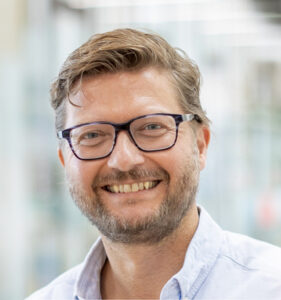
Dominik Obrist
University of Bern, Switzerland
Dominik Obrist is Professor of Cardiovascular Engineering at the ARTORG Center for Biomedical Engineering Research of the University of Bern. He holds a degree in mechanical engineering from ETH Zurich and earned his doctoral degree in 2000 at the Department of Applied Mathematics of the University of Washington. From 2000 to 2005, he worked for the supercomputer company Cray Inc. In 2005, Dominik Obrist returned to academia as a senior researcher at the Institute of Fluid Dynamics of ETH Zurich, where he established a research group for biomedical fluid dynamics. His main research interests include the design of heart valve prostheses and the development of novel technology for the diagnosis and treatment of microvascular diseases.
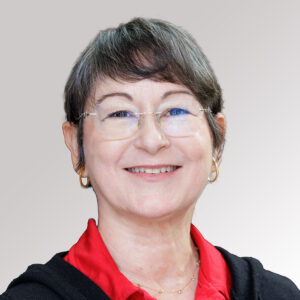
Elaine M. Raybourn
University of Central Florida, US
Elaine M. Raybourn is a social scientist and Courtesy Research Professor in the Department of Computer Science at the University of Central Florida. Formerly at Sandia National Laboratories, she contributed to the DOE ASCR Exascale Computing Project (ECP). She holds a Ph.D. in Intercultural Communication with an emphasis in Human Computer Interaction from the University of New Mexico, and certificates in Modeling & Simulation of Behavioral Cybersecurity and Data Ethics from the University of Central Florida and Cornell University, respectively. Elaine was a European Research Consortium for Informatics and Mathematics (ERCIM) Fellow with Fraunhofer FIT in Germany, the French National Institute for Computer Science (INRIA), and BT Global Research and Development in the UK. Her interests include team science and HPC AI readiness.
Target Audience
The PASC Conference seeks to engage participants from academia, research labs and industry to address important issues in HPC and computational science. PASC26 is inviting researchers from diverse scientific backgrounds to promote interdisciplinary collaboration and exchange of expertise. The conference is an opportunity for researchers in branches of science that require computer modeling and high-performance simulations to discuss computational techniques and technologies.
Event format
We are pleased to host PASC26 as an in-person event at University of Bern & PHBern, Switzerland.
Conference contributors whose submissions are accepted for presentation at the conference, should thus plan to travel to Bern and present their work on-site.
Program
The technical program of PASC26 is organized around the following scientific domains:
- Chemistry and Materials (incl. ceramics, metals, polymers)
- Climate, Weather, and Earth Sciences (incl. solid earth dynamics)
- Applied Social Sciences and Humanities (incl. behavioral, economic, legal, political, business, philosophy, languages, the arts, ethics in computing such as environmental impact of HPC, mitigation of biases in algorithms, machine learning, etc.)
- Engineering (incl. computational fluid dynamics, computational mechanics, computational engineering, materials, acoustics, signal processing, etc.)
- Life Sciences (incl. biophysics, computational biomechanics, genomics, bioinformatics, systems biology, neuroscience, and computational biology)
- Physics (incl. astrophysics, cosmology, plasma physics, and quantum information sciences)
- Computational Methods and Applied Mathematics
We also encourage submissions that explore AI across all the above areas.
The three-day program will include keynote presentations, minisymposia, peer-reviewed papers, panels and poster sessions. The conference is co-sponsored by ACM SIGHPC, and full papers will be published in the ACM Digital Library.