Co-Designing Trust: Interdisciplinary HPC, AI, and the Future of Science
As exascale computing becomes more prominent, alongside AI-driven models and heterogeneous architectures, the nature of scientific discovery is evolving, and with it comes our responsibility to ensure its trustworthiness.
This panel addresses shifts driven by scale, the balance between physics-based simulations and machine-learned surrogates, and the growing complexity of computational workflows. Can verification, validation, and uncertainty quantification (VVUQ) keep pace with non-deterministic hardware, low-precision computation, and workflows/volumes that are increasingly difficult to reproduce? As AI co-authors discovery, how do we ensure accountability in science?
Beyond the technical domain, the panel explores HPC’s role in shaping societal trust. As scientific communication competes for attention in digital spaces, how can the community ensure that its outputs remain credible, transparent, and accessible?
The panel highlights inclusive co-design as a promising path forward; bringing together diverse stakeholders across disciplines, sectors, and society to embed trust and shared ownership into the foundations of research.
Moderators
The panel discussion will be moderated by Conference Co-Chairs Dominik Obrist (University of Bern, Switzerland) and Elaine M. Raybourn (University of Central Florida, USA).
Panelists

(International Computation and AI Network, Switzerland)
Katharina Frey is co-founder and Executive Director of the International Computation and AI Network (ICAIN) at ETH Zurich. Since its launch in 2024, she has led ICAIN in building a global collaboration platform connecting leading scientific institutions, AI research networks, and supercomputing centers to advance responsible AI, talent development, and shared computational capacity worldwide. Prior to founding ICAIN, she served for 17 years as a Swiss diplomat, helping shape Switzerland’s international strategy on digital governance and cybersecurity. She holds degrees in law from the University of Zurich and in public administration from the London School of Economics.
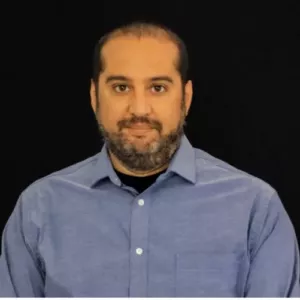
(Los Alamos National Laboratory, US)
Danny Perez is a staff scientist at Los Alamos National Laboratory. His work focuses on novel atomistic, multi-scale, and machine-learning methods, on their implementation in high-performance simulation codes, and on their application to a range of applications, including fusion and fission energy, particle accelerators, and separation of critical materials. From 2017 to 2024, he led a national effort developing co-design approaches that combine machine learning with exascale computing for materials simulation, culminating in demonstrations at scale on the first two exascale computers in the US. For his leadership role in the American Exascale Computing Project, he was awarded a DOE Secretary Achievement Award.
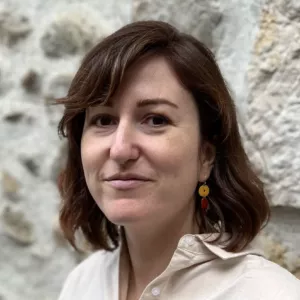
(EPFL, Switzerland)
Emma Tolley is an Assistant Professor at EPFL’s LASTRO laboratory, working at the intersection of high-performance computing, AI, and radio astronomy. She leads an interdisciplinary group developing HPC and machine-learning tools to handle the massive data demands of next-generation infrastructure like the Square Kilometre Array Observatory — including GPU-accelerated imaging algorithms and physics-informed neural networks. Before this, Tolley spent nearly a decade at CERN searching for dark matter with the ATLAS Detector. She holds a Ph.D. in Physics from Harvard and a B.S. from MIT.
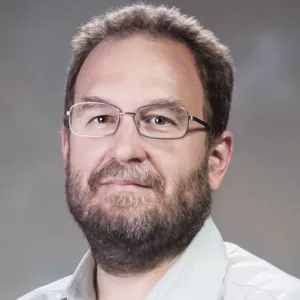
(Sandia National Laboratories, US)
Jay Lofstead is a Principal Member of Technical Staff at Sandia National Laboratories. His research interests focus around large-scale data management and trustworthy scientific computing. In particular, he works on storage, I/O, metadata, workflows, reproducibility, software engineering, machine learning, and operating system-level support for any of these topics. In addition to these topics, he is also deeply interested in ethics of computing in general and how to drive inclusivity across the computation-related science domains. Dr. Lofstead received his Ph.D. in Computer Science from the Georgia Institute of Technology in 2010.