Keynote Lecture PASC26 Conference
Building Bridges between Application, System Software, and Hardware Developers
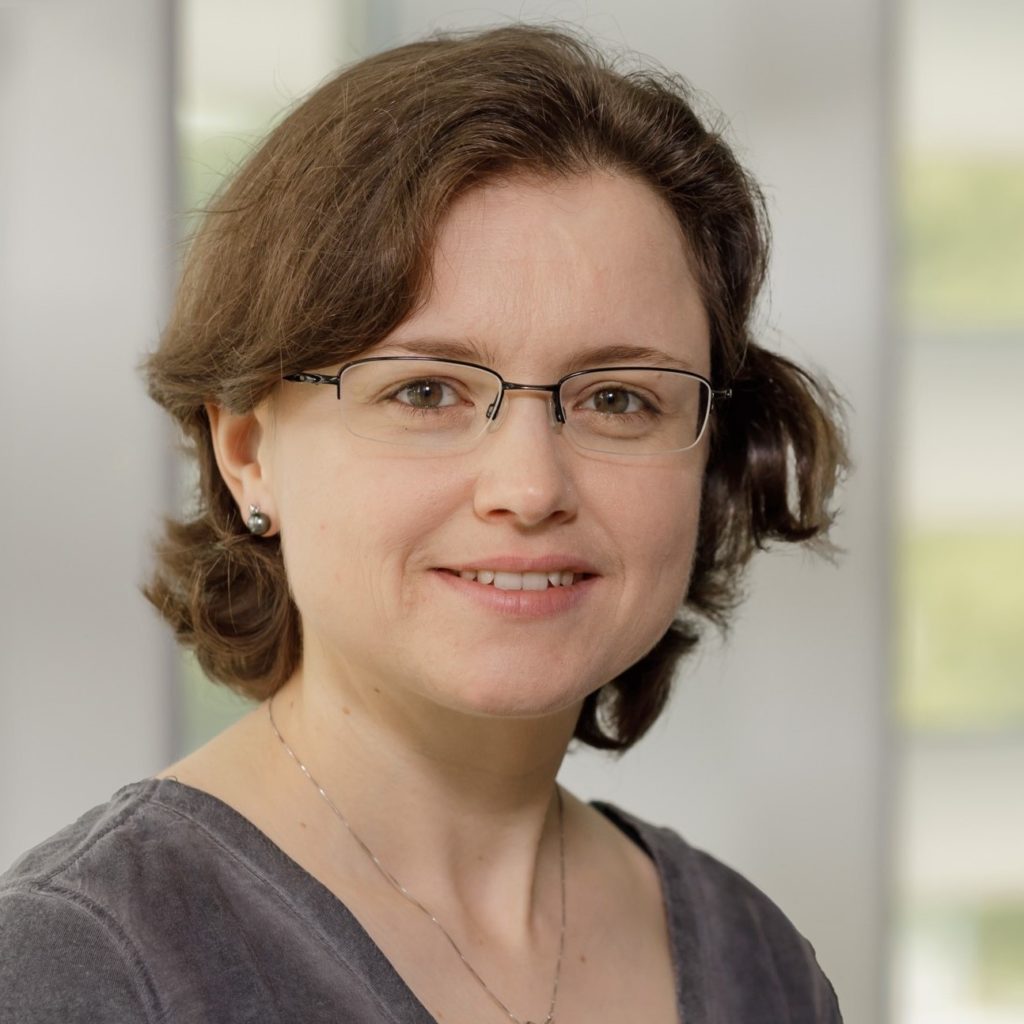
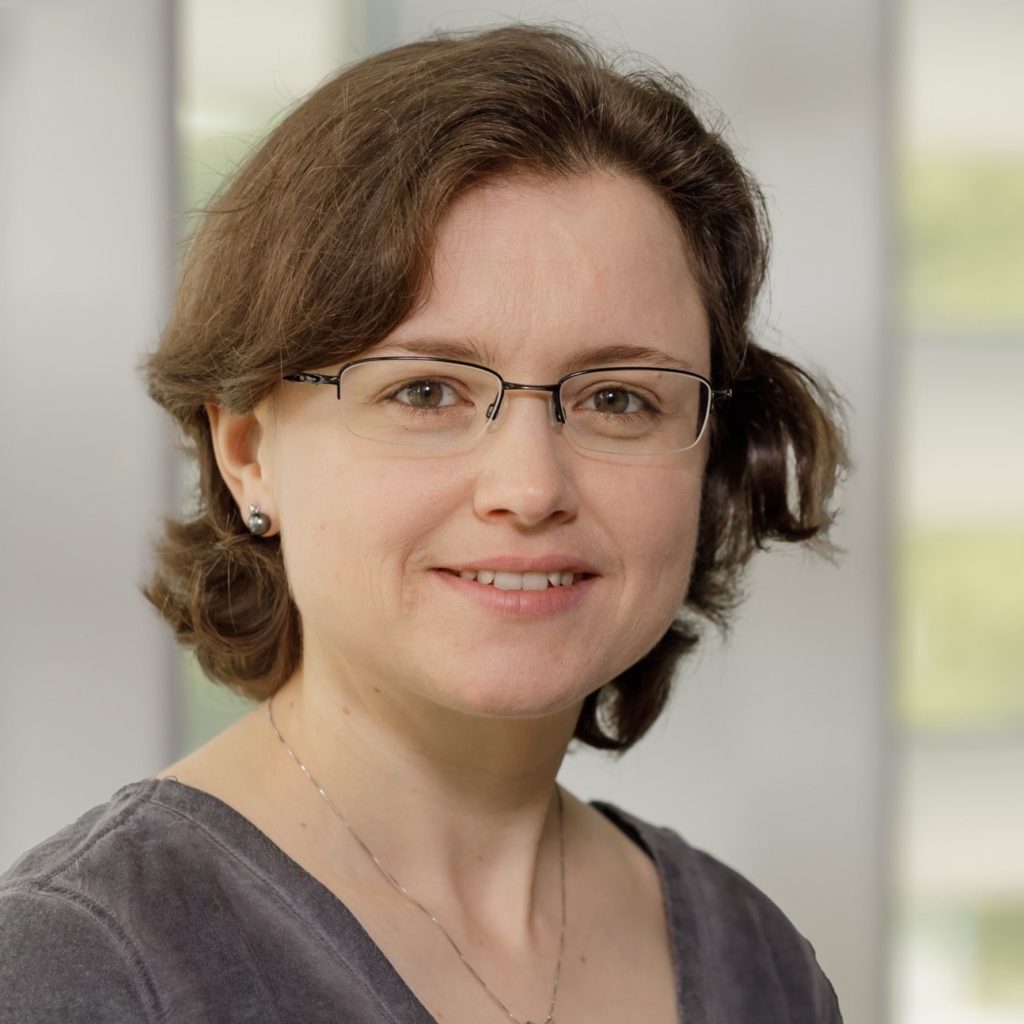
(Jülich Supercomputing Centre, Germany)
High-Performance Computing (HPC) is intrinsically interdisciplinary, bringing together communities with distinct goals, methods, and vocabularies; from application scientists seeking scientific insight, system software developers ensuring portability and robustness, to hardware architects optimizing for performance and efficiency. Although these actors contribute to a shared ecosystem, they often operate within different cultural and professional frameworks.
Co-design has emerged as a powerful mechanism to bridge these divides. Beyond mere technical collaboration, it functions as a process of “cultural translation,” enabling fact-based dialogue among application developers, software engineers, and hardware designers. By exposing real workload requirements and clarifying system constraints at different layers of the stack, co-design fosters mutual understanding and shared ownership of design decisions. When user communities are engaged early and their feedback is visibly integrated, trust in the acceptance of new HPC solutions increases.
Drawing on fifteen years of experience in European HPC research and system development projects, this talk reflects upon and aims to trigger discussion around open questions on: How can co-design continue to mediate between the distinct cultures of science, engineering, and user communities? And how might its collaborative principles inform broader questions of trust in scientific processes, where technical transparency must be paired with social legitimacy?
Estela Suarez is Joint Lead of the department Novel System Architecture Design at the Jülich Supercomputing Centre, and Associate Professor for High Performance Computing at the University of Bonn. Her expertise is in HPC system architecture and codesign. As leader of the DEEP project series, she has driven the development of the Modular Supercomputing Architecture, including the implementation and validation of hardware, software and applications. In addition, she leads the energy efficiency project SEANERGYS and has led the codesign efforts within the European Processor Initiative in 2018-2024. From 2024 to 2025 she has been Senior Principal Solution Architect at SiPEARL, during a sabbatical. She holds a Master’s degree in Astrophysics from the University Complutense of Madrid (Spain) and a PhD in Physics from the University of Geneva (Switzerland).
Public Lecture PASC26 Conference
Science, Society, and Computation: Building Trust Across Scales – from Climate Models to LLMs
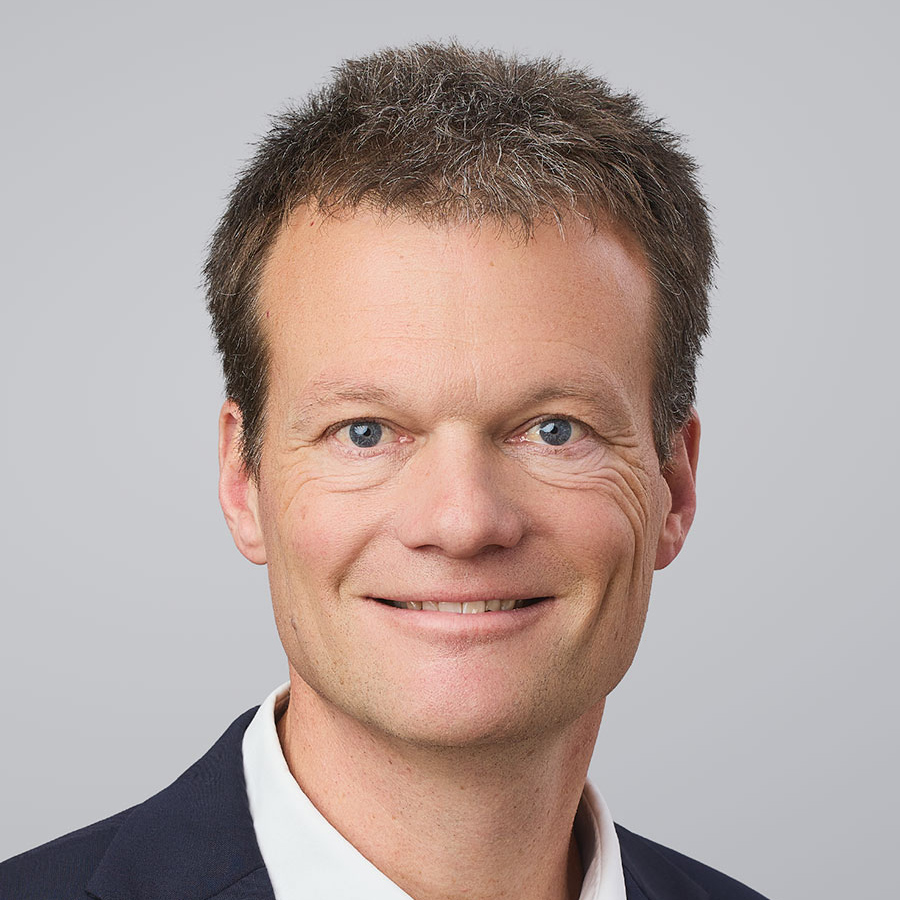
(ETH Zurich, Switzerland)
When Nobel price winner Suki Manabe built his first climate model in the late sixties, he only had a few megabytes of memory. He could not imagine the scale of computing and the magnitude of data we have today. Yet he gained crucial insight into how feedbacks in the atmosphere will affect the patterns of climate change we are observing today.
Science on weather and climate has come a long way since then. As we continue to push frontiers of modelling atmospheric processes in finer details and computing at higher resolutions, what will we learn tomorrow? How much more do we need to know for informed decisions? How much are we willing to invest in new technology, and what are the benefits to us, and to the coming generations?
From a time when knowledge was a privilege of a few, we have entered an era where information is over-abundant. Machine Learning and Large Language Models (LLMs) are powerful technologies, but they also come with potential hazards. How do we separate true insight and understanding from noise? How do we ensure trust in models, predictions, science, and institutions? These are open questions for the unprecedented era we have entered. This lecture is aimed at the broad public and sketches how computing and data continue to transform the way we interact with science, models, and scenarios in an increasingly complex world.
Reto Knutti is Professor of Climate Physics at ETH Zurich and chairs the Center for Climate System Modelling. By combining understanding of processes, observational data, climate model simulations and advanced statistical methods, he has made significant contributions to quantifying human contributions to observed climate trends and improving future climate projections. He served as a lead and coordinating lead author for the Intergovernmental Panel on Climate Change (IPCC) assessment reports and coordinated Swiss Climate Scenario Reports. As a speaker and prominent public voice, he regularly engages with policymakers, business leaders, and the media on climate action, sustainability and the role of and trust in science in society.
PASC26 Best Paper
Combining Domain and Tensor Parallelism to Train Multi-Billion-Parameter AI Weather Models

(Karlsruhe Institute of Technology, Germany)
AI-based methods have recently revolutionized atmospheric modeling. Successes in medium-range forecasting have led to rapid developments towards AI-based models. However, accurate modeling of complex atmospheric dynamics at high spatial resolutions requires billions of neural network parameters and gigabyte-sized data samples, making accelerator memory and I/O-bandwidth the bottlenecks for model training. To overcome these limitations, we introduce Jigsaw, a distributed training and inference scheme that leverages domain and tensor parallelism to eliminate memory redundancy across model-parallel processes and reduce I/O demands. We apply the Jigsaw parallelization scheme into an MLP-Mixer architecture, WeatherMixer, a multi-layer-perceptron-based model with global vision that is well-suited for learning weather phenomena. Using Jigsaw, we train WeatherMixer with up to 3.2B-parameters, achieving predictive performance competitive with numerical weather prediction and state-of-the-art AI models. To highlight the computational performance, we perform scaling experiments on global 0.25° (≈ 30 km resolution) ERA5 data across two HPC systems. Anticipating that future reanalysis datasets will include even higher resolutions, we demonstrate, for the first time, training on 0.125° data. Scaling experiments demonstrate that the dataloading bottlenecks arising from high-resolution input data samples are reduced through domain parallelism, subsequently improving per-GPU computational throughput.
In compute–communication–limited regimes, Jigsaw achieves state-of-the-art performance in distributed model training, with 97% of theoretical peak performance on 4 GPUs; and a strong scaling speedup of 6.4 when training across 8 GPUs. By combining domain, tensor, and data parallelism at larger scales, training on 256 GPUs reaches 11 PFLOPs with a scaling efficiency of 72% compared to 51% without Jigsaw.
Deifilia Kieckhefen is a doctoral researcher in the group of Robust and Efficient AI at the Karlsruhe Institute of Technology. Her research focuses on developing novel parallel methods for distributed AI model training, with applications in high-resolution domains such as atmospheric forecasting. She designs software to optimally leverage existing hardware in order to improve efficiency and scalability in large-scale model training.